My recent scholarship explores how Africans have transformed their understanding of time after the colonial encounter, and what consequences these changes had for local societies, politics, and culture.
Currently, I’m transforming my dissertation “Branches of Memory: Colonialism and the Making of the Historical Imagination in Namibia and Tanzania, 1914-1969”, which I defended in August 2022 at Princeton University, into a book manuscript. The book will compare the ways in which the end of Africa’s shortest-lived colonial empire illuminates the nature of postcolonial sovereignty and the emergence of modern restorative justice politics.
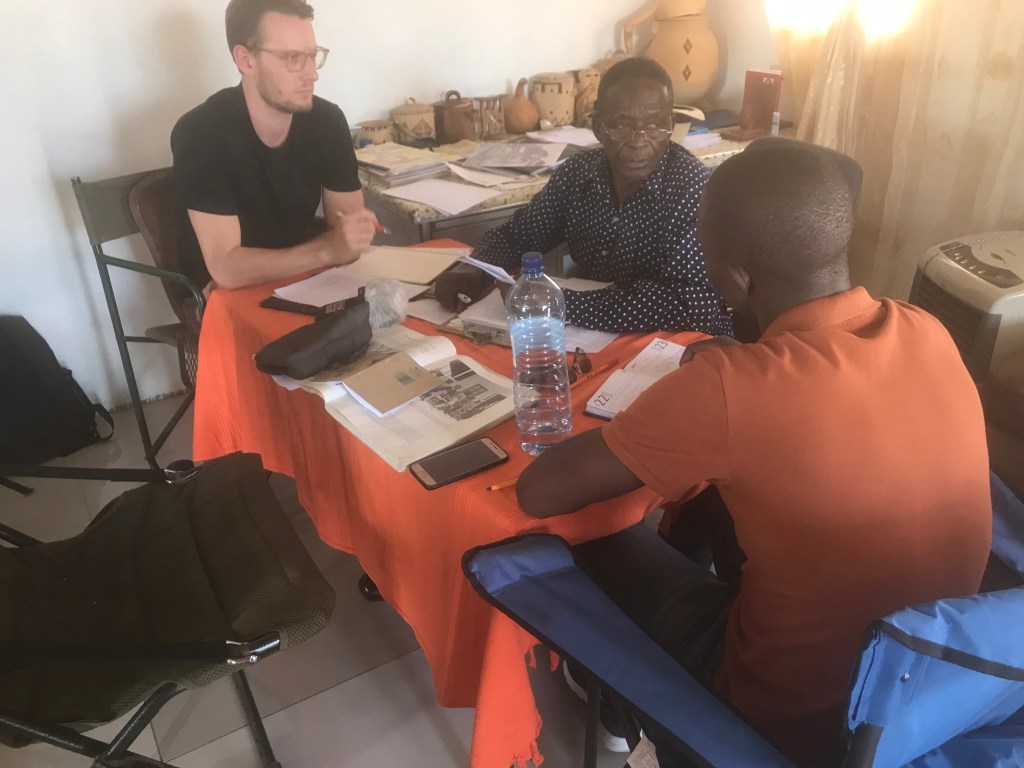
I have also begun work on two other book-length studies. One will investigate the relationship between East African societies and South Asian traders in what is today Tanzania from the late nineteenth century to the interwar period. The other uses GIS technology, oral history and archival maps to analyze the environmental repercussions of the Maji Maji War of 1905-1907 in southern Tanzania, and how local peoples have recalled this genocidal conflict since.
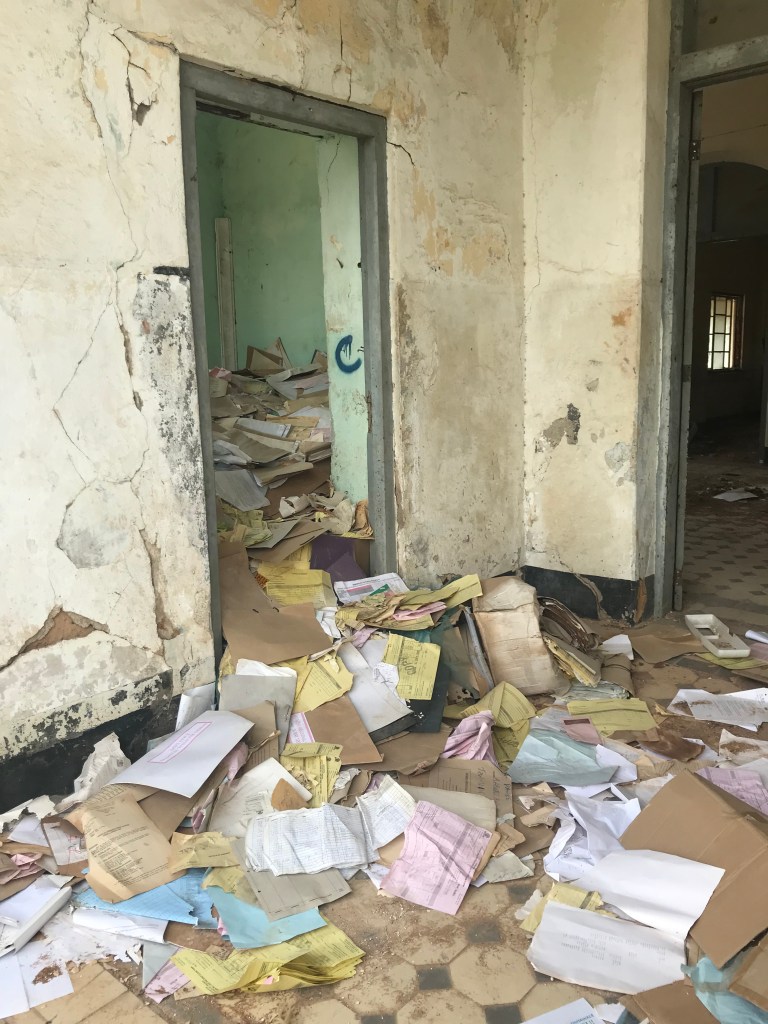
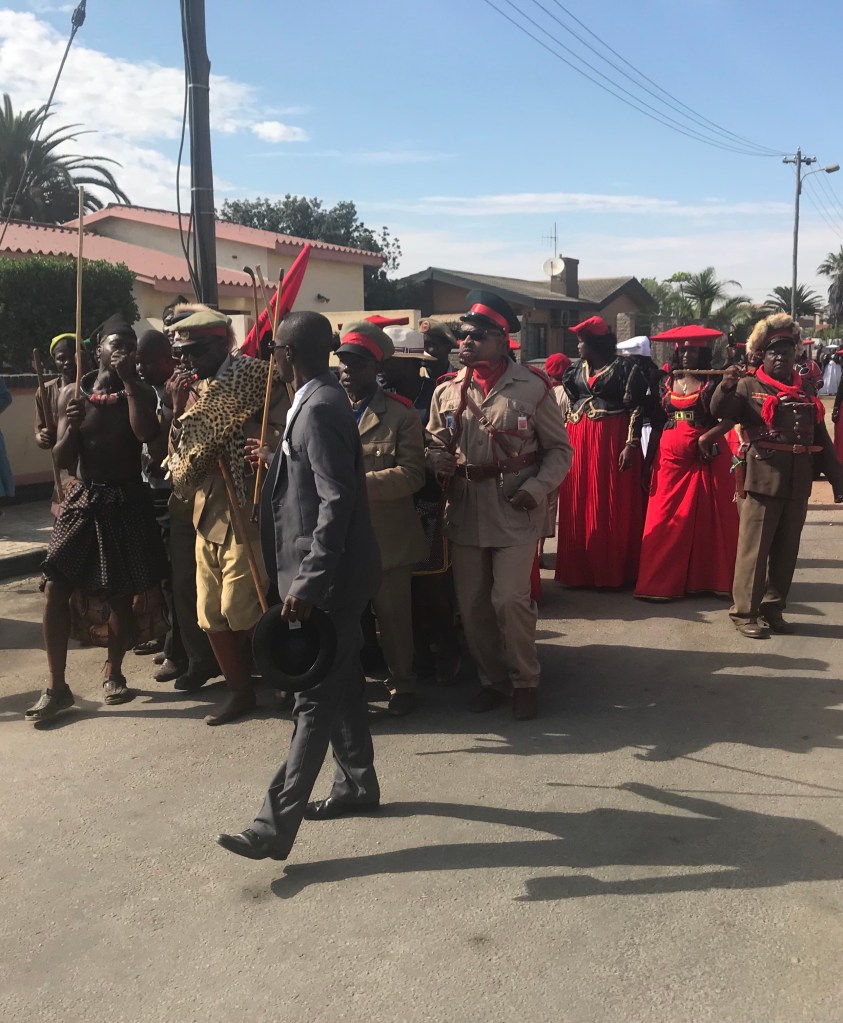
My interdisciplinary research combines written archives with oral history interviews in Otjiherero and Swahili, participant observation of contemporary commemorations and performances, as well as analysis of material culture.
I have worked in governmental, mission, and private archives in Germany, Namibia, Tanzania, Switzerland, the United Kingdom, and the United States. I am fluent in Swahili and speak and understand basic Otjiherero.
While rooted in African history, my scholarship seeks to encourage new perspectives on the continent through cross-disciplinary collaborations that speak to wider themes in the humanities and social sciences. Together with Sakiru Adebayo (Vancouver), Nancy Rushohora (Dar es Salaam), and Hanna Teichler (Frankfurt), I am editing the volume on Africa in Brill’s new Handbook Series in Memory Studies. You can learn more about the series here. Bringing together senior and junior scholars from fields ranging from anthropology and history to politics, the handbook will provide a much-needed synthesis to key concepts, theories, and debates in the interdisciplinary study of African memory cultures and practices.
 Fabian Krautwald